imagining relationship
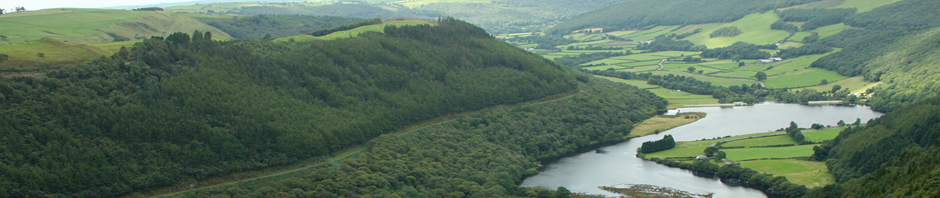
Landscape painting is an art that mediates nature and culture: it’s two sides of a relationship.
Art writing often dwells on meaning as a verbal thing, part of a network of ‘texts’. But this blog focuses on aspects of realist painting that are resistant to words. It’s not that painting does not encode cultural meanings – it has no choice. But it can also be a hand made, visual interaction with the environment whose very uniqueness carries a certain resistance to ‘discourse’. Hand made made contact with the world beyond ourselves introduces something worthwhile and strange to culture. That at least is my belief.
This blog is written in the UK where 82 % of the population lives in urban areas. Globally, the figure is 52% and rapidly rising. This means that for most of us, most of the time, contact with nature is occasional or indirect. Yet with urbanisation there has also been a huge expansion in natural science. The result is, paradoxically, that we now know much more about nature but experience it much less. It’s a dangerous asymmetry that we are only just beginning to think about.
Perhaps painting can help with this thinking?
We put images of nature on the inside walls of our shelter. This started at the back of the cave, with animals painted on the rock. But the landscape in the frescoes of the Villa Maser by Veronese (1575), one of the most civilized painting schemes I’ve ever seen, is part of the same family of images. So too is the drawing of a tree by a five year old on the fridge door. For humans, images of nature seem to be a necessity of life, and knowing something about the history of these images can help us see what might be done with them today.
Landscape painting is just one of a thousand different art forms. But it is an indicative art form, indicative of a relationship between man and nature – between what is on our side of the wall and what is out there, beyond words.
 the geography of art